5 min read

How Do Nonprofits Keep Donor Data Consistent Across Multiple CRMs?

Connect Multiple Nonprofit CRM Systems and Create a Single Source of Truth

Nonprofits keep donor data consistent across multiple CRMs by using automated synchronization workflows, configurable matching logic, validation rules, and shared data governance standards. These processes align constituent records, reduce duplicate donor data, preserve data integrity, and create more reliable reporting across systems.

Many enterprise nonprofits operate multiple donor databases across regions, chapters, affiliates, programs, or inherited systems from mergers and acquisitions.

Over time, constituent records become fragmented across CRM platforms. Donors appear multiple times in different databases. Contact information conflicts between systems. Reporting varies depending on which database is used.

The result is a governance challenge that affects fundraising, operations, reporting, and leadership decision-making.

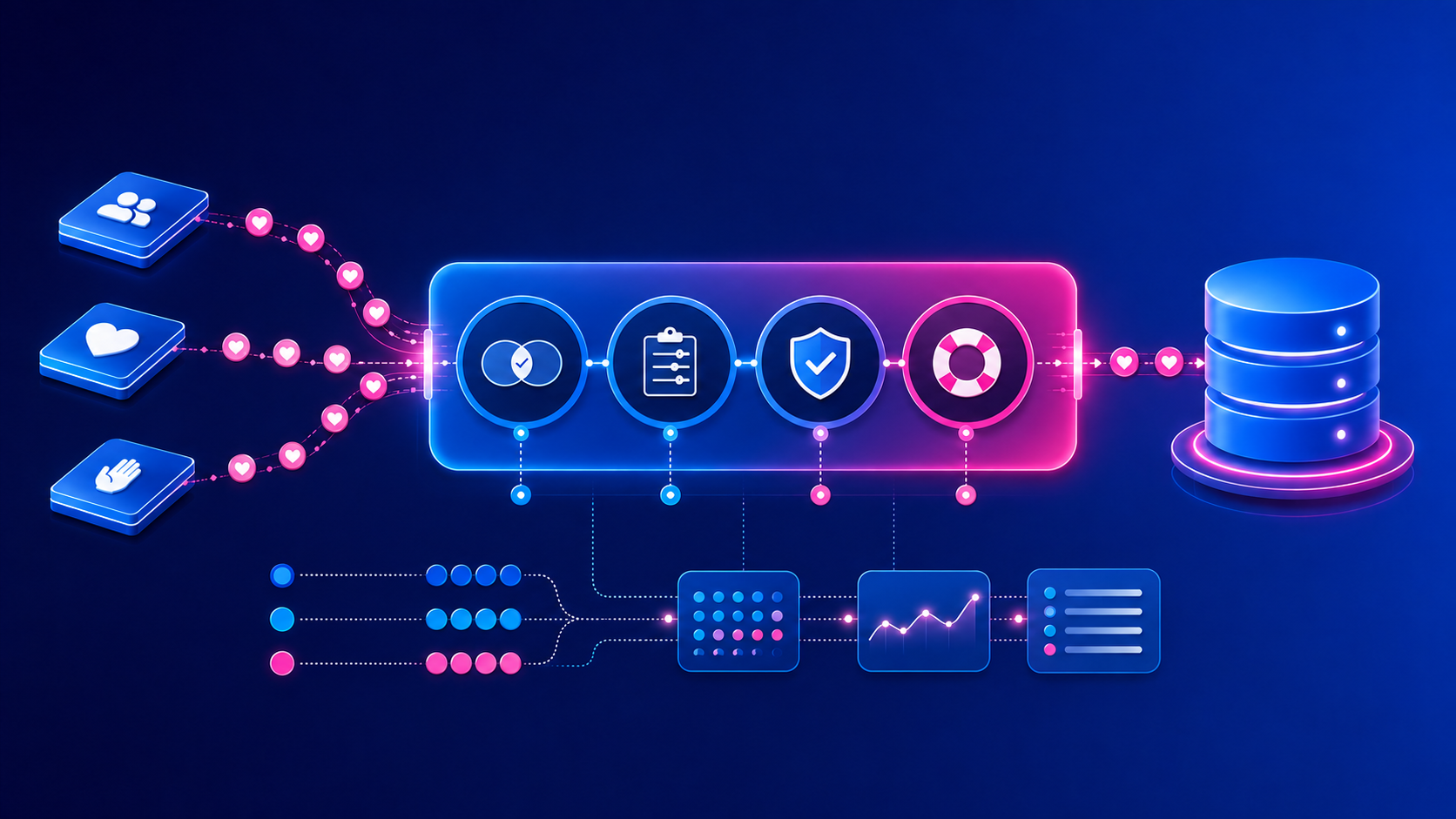
Charity Automator Data Flow helps nonprofits synchronize constituent records across multiple CRM systems, reduce duplicate donors, and create a trusted single source of truth for donor data.


Why Do Multiple CRMs Create Inconsistent Donor Data?

Multiple CRMs create inconsistent donor data when records are updated independently, matching rules differ between systems, and teams maintain separate versions of the same constituent information. Over time, this creates duplicate records, conflicting contact details, fragmented donor histories, and unreliable reports.

Common examples include:

  • Salesforce, Raiser's Edge NXT, and Financial Edge NXT
  • National and chapter CRM systems and Excel files
  • Affiliate organization databases
  • Systems inherited through mergers and acquisitions

Each database contains valuable constituent information.

The challenge begins when records are updated independently.

A donor changes their address in one CRM but not another. A constituent is created in multiple systems. Different teams maintain different versions of the same donor record.

Over time, organizations lose confidence in their data because no one knows which system contains the most accurate information.

What Are the Signs That Your CRM Systems Are Out of Alignment?

Conflicting donor records, duplicate constituents, inconsistent reports, fragmented giving histories, and frequent manual reconciliation are common signs that CRM systems are no longer synchronized.

Data Quality Issues

  • The same donor exists in multiple databases
  • Constituent records contain conflicting information
  • Duplicate constituent records continue to grow


Reporting and Visibility Challenges

  • Reports produce different results depending on the source
  • Leadership lacks a complete enterprise-wide donor view
  • Donor histories are fragmented across systems


Team and Process Inefficiencies

  • Teams disagree about which CRM is correct
  • Staff manually compare records between databases
  • Data governance becomes increasingly difficult


These issues often indicate that constituent information is not being synchronized consistently across systems.

How Does Charity Automator Data Flow Synchronize Multiple CRMs?

Charity Automator Data Flow synchronizes multiple CRM systems using configurable matching logic, business rules, data validation, transformation, and automated workflows. It helps nonprofits maintain consistent constituent records without relying on recurring manual imports, exports, and reconciliation.

Synchronize Constituent Records Across CRM Systems

Charity Automator Data Flow is a nonprofit CRM integration solution that synchronizes constituent information across multiple donor databases.

Using configurable matching logic, business rules, validation, and automated workflows, Data Flow helps organizations maintain consistent constituent records across systems.

Instead of relying on manual imports, exports, and reconciliation processes, organizations can automate constituent synchronization and donor database consolidation.

Data Flow helps organizations:

  • Connect multiple nonprofit CRM systems
  • Synchronize constituent records automatically
  • Support Salesforce and Raiser's Edge integration
  • Consolidate donor information across databases
  • Apply enterprise-wide business rules
  • Improve constituent data quality
  • Reduce duplicate donor records
  • Maintain consistent donor histories
  • Improve reporting consistency
  • Create a single source of truth

The result is a more connected organization with greater confidence in constituent data.

What CRM Synchronization Scenarios Can Nonprofits Automate?

Nonprofits can automate CRM synchronization to align national and regional databases, connect Salesforce with Raiser’s Edge NXT, consolidate donor information across multiple Blackbaud environments and affiliated organizations, and unify donor data following a merger or acquisition.

01

Synchronize National and Regional CRM Systems

Keep donor and constituent records up to date between a national CRM and the databases used by regional offices or local chapters. When contact details or other approved information changes in one system, automated synchronization workflows can update connected systems according to your organization’s business and data governance rules.

02

Connect Salesforce and Raiser’s Edge NXT

Synchronize relevant donor and constituent information between Salesforce and Raiser’s Edge NXT. Configurable matching, validation, and transformation rules help maintain consistent records while allowing each team to continue working in the CRM that supports its responsibilities.

03

Align Multiple Blackbaud and Affiliate Databases

Connect multiple Blackbaud environments and databases maintained by affiliated organizations, programs, or regional teams. Data Flow helps reduce duplicate donor records, resolve conflicting information, and provide a more complete view of constituent relationships across the organization.

04

Unify CRM Data After a Merger or Acquisition

Connect inherited CRM systems following a merger or acquisition without requiring an immediate platform replacement. Synchronizing donor data across databases helps reduce data fragmentation, preserve constituent history, and create a trusted source of information for fundraising, reporting, and leadership decisions.


What Are the Benefits of Synchronizing Multiple Nonprofit CRMs?

Synchronizing multiple nonprofit CRMs helps reduce duplicate donor records, preserve more complete constituent histories, improve reporting consistency, protect donor data integrity, and decrease the time teams spend reconciling conflicting information.

Create a Single Source of Truth

Maintain consistent constituent information across all connected CRM systems.

Reduce Duplicate Donors

Use matching logic and synchronization rules to identify and reduce duplicate constituent records.

Maintain Complete Donor Histories

Provide teams with a more complete view of constituent relationships and engagement.

Reduce Manual Reconciliation

Spend less time comparing records and resolving conflicts between systems.

Support Organizational Growth

Scale fundraising operations without increasing constituent data complexity.

Improve Reporting Consistency

Reduce discrepancies between databases and increase confidence in fundraising reports.


How Does CRM Synchronization Work?

CRM synchronization works by connecting data sources, configuring matching and governance rules, automating approved data transfers, and continuously monitoring integrations and exceptions.

01

Connect Your Data Sources

Connect the donor databases and CRM platforms your organization already uses, with the technical setup and integration work handled for you.

02

Configure Your Business Rules

Requirements are reviewed and the matching logic, validation, transformation, governance rules, and synchronization workflows are configured to keep your systems aligned.

03

Automate Data Movement

Once configured, synchronization processes automatically move information between systems according to your organization's business rules.

04

Monitor and Maintain

Synchronization activity, exceptions, workflow performance, and integration health are continuously monitored to ensure integrations continue to operate reliably.


Ready to Connect Multiple CRM Systems?

Eliminate duplicate donors, synchronize constituent records, and create a single source of truth across your organization.

Give fundraising teams, operations staff, and leadership a complete and trusted view of donor data across every CRM system.


Frequently Asked Questions About Nonprofit CRM Synchronization

Can Data Flow synchronize multiple Blackbaud databases?

Yes. Data Flow can help keep constituent information aligned across multiple Blackbaud environments.

How does Data Flow reduce duplicate donor records?

Data Flow uses configurable matching logic and synchronization rules to identify, manage, and reduce duplicate constituent records across systems.

Can Data Flow help create a single source of truth?

Yes. Data Flow helps organizations synchronize constituent information across databases so teams can work from more consistent and trusted donor records.

Do we need to replace our existing CRM?

No. Data Flow works alongside your existing CRM systems and helps connect them into a unified constituent data ecosystem.

Can information move automatically between systems?

Yes. Workflows can be configured to synchronize constituent information automatically according to your organization's requirements.

Can data move in both directions?

Yes. Data Flow can support bi-directional CRM synchronization where appropriate.

Who manages the integration and synchronization work?

Unlike software-only solutions, Charity Automator includes a dedicated nonprofit data services team that helps design, configure, monitor, and maintain your integrations. Our team works with you to understand your systems, implement business rules, and ensure data continues flowing reliably between platforms.

Is Data Flow built specifically for nonprofits?

Yes. Data Flow was designed specifically for nonprofit CRM integration, constituent synchronization, donor database consolidation, and fundraising data governance. In addition to the technology, our experienced nonprofit data specialists provide ongoing support and expertise to help organizations get the most value from their connected systems.