Fundraising data integration and automation software
Charity Automator Data Flow
The controlled automation layer between your fundraising platforms and CRM
Keep CRM data current while reducing spreadsheet handling, processing delays, inconsistent revenue coding and reconciliation issues.
What is Data Flow?
Automated transaction processing built around your organization’s rules
Charity Automator Data Flow is a SaaS platform that provides a controlled automation layer between your fundraising platforms and CRM. Operated and supported by SimpliPhi, it collects incoming transactions, compares them with existing CRM records, matches constituents, and applies the coding and business rules approved by your organization.
Transactions that meet the approved requirements move into your CRM on an agreed schedule. SimpliPhi monitors transactions requiring attention and manages their correction and recovery. Source IDs, batch details and processing history support reconciliation and auditability.
How Nonprofits Use Data Flow
Reduce the repetitive work required to collect, match, code, validate and process fundraising transactions in your CRM.
Automate transaction processing
Collect gift, constituent, event and engagement data from connected platforms and approved files without repeated manual uploads.
Match constituents and reduce duplicate risk
Data Flow compares approved attributes with existing CRM records before creating or updating a constituent. Possible matches are held for review when attention is required.
Consistently apply your approved rules
SimpliPhi configures and manages how Data Flow matches constituents and applies campaign, fund, appeal, and other required CRM coding. Your team defines and approves the requirements without managing the technical process.
Manage exceptions separately
Valid transactions continue automatically, while SimpliPhi monitors transactions requiring attention and manages their correction and recovery.
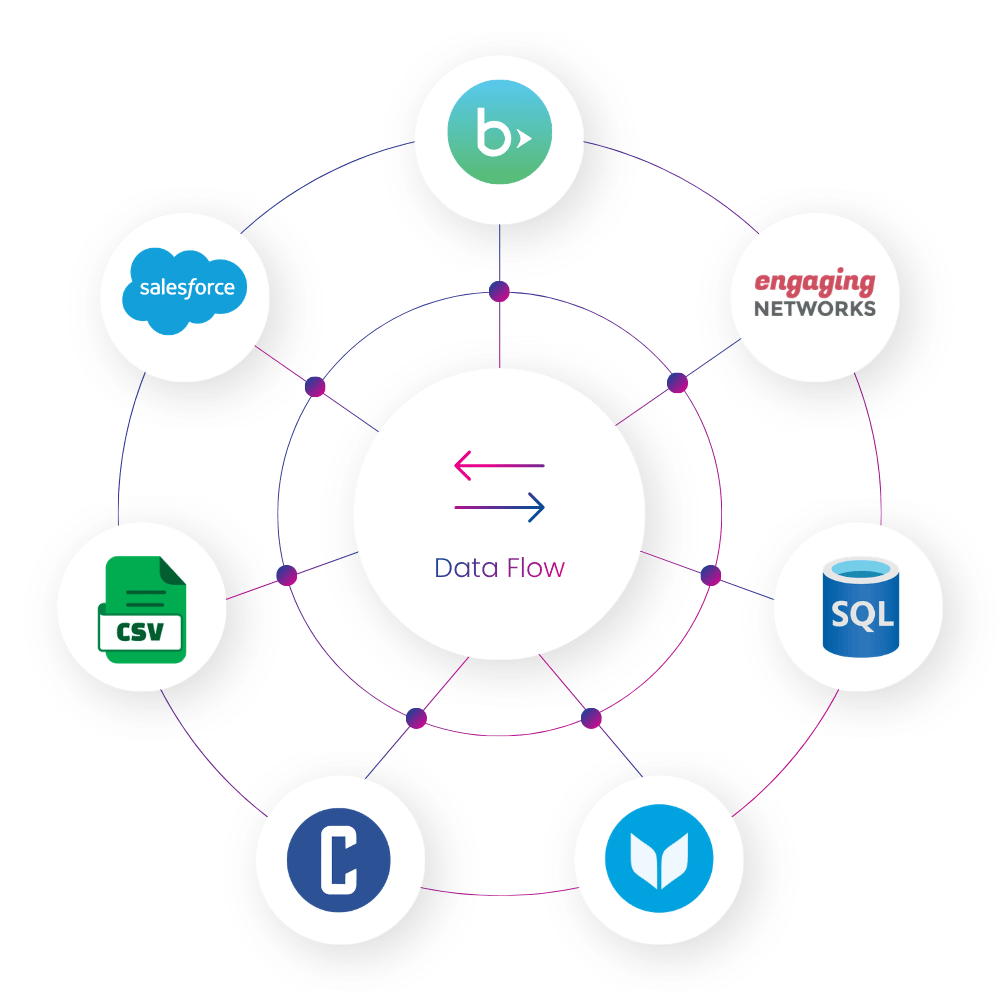
Fundraising Platform Integrations
Keep information moving between the platforms your team relies on every day.
and more...
Reviewing data security with your IT team?
See how Charity Automator handles data residency, encryption, secure access, retention, and data ownership. Share these details with colleagues evaluating the solution.
How Nonprofits Transform Fundraising Operations
Learn how organizations are improving data quality, streamlining workflows, and supporting better fundraising outcomes with Data Flow.
Data Flow in action
17,000 gifts automated. Approximately 30 staff hours saved per month.
Roswell Park Alliance Foundation used Charity Automator Data Flow to automate the movement of Luminate Online gifts into Raiser’s Edge NXT, reducing repetitive processing work and helping the team manage a high volume of fundraising transactions more consistently.
How does Data Flow work?
Keep fundraising systems aligned and your data up to date.
1. Collect
Retrieve transactions from connected platforms, APIs and approved files on the agreed schedule.
2. Apply your approved matching and coding rules
Data Flow matches constituents and applies the coding and business rules configured and managed by SimpliPhi according to your approved requirements.
3. Validate and process
Data Flow validates the results and moves transactions that meet the approved requirements into your CRM.
4. Manage exceptions and support reconciliation
SimpliPhi monitors transactions requiring attention and manages their correction and recovery. Source IDs, batch details, and processing history support reconciliation.
Key Features & Benefits
Controlled, organization-specific automation that keeps fundraising transactions moving into your CRM according to approved rules and schedules, with SimpliPhi managing configuration, monitoring, maintenance and recovery.
Connect data from various platforms, ensuring accuracy and processing on an agreed schedule
Tailor workflows to fit your organization's unique needs.
Error Reduction: Minimize manual entry errors with automated processes.
Scalability: Grow your data management capabilities as your organization expands.
File-based: Race Roster, Public Outreach, Canada Helps, Ascend, CrowdChange, WooCommerce, AKA Raisin, Benevity, Raffle Box, Gravity Forms, Virtuous
Custom: Any CSV, database or flat file with donor or campaign data
Keep Your Fundraising Systems Aligned.
Tell us which fundraising platforms and CRM you use. We will review your current process, manual work, matching and coding requirements, exceptions, and reconciliation needs.
Frequently Asked Questions
Get answers to common questions about nonprofit data integration, including supported systems, implementation timelines, data synchronization, security, error handling, and ongoing support.
-
How does Data Flow connect our fundraising platforms and CRM?
Charity Automator Data Flow is fundraising data integration and automation software. It provides a controlled automation layer between your fundraising platforms and your CRM.
It collects incoming transactions, matches them to existing records, applies your coding and business rules, validates results, and moves approved transactions on an agreed schedule.
Supported systems, records, fields, and processing directions are confirmed during implementation.
-
Will Data Flow create duplicate records in our CRM?
Data Flow reduces duplicate risk through organization-specific matching, validation, and exception management.
Before a new record is created, Data Flow can compare several approved attributes with existing CRM records. Strong matches follow the agreed processing rules, while uncertain matches can be held for review.
No matching process can guarantee that duplicates will never occur. Data Flow is designed to reduce that risk and make possible matches visible before processing.
-
Can we implement Data Flow before a major fundraising campaign or event?
The timeline depends on your connected systems, transaction types, business rules, and testing requirements.
SimpliPhi configures the Data Flow platform and works with your team to test representative transactions and validate results before deployment. Share your campaign date early so we can assess the scope and agree on a realistic implementation schedule.
-
What work is required from our team?
We handle the technical configuration, integration development, monitoring, and ongoing support.
Your team's primary role is helping us understand your business processes, reviewing mapping requirements, validating test results, and approving the final workflow before launch.
Our goal is to reduce the burden on fundraising, operations, and IT teams rather than add to it.
-
What happens if we add a new fundraising platform in the future?
Data Flow is designed to adapt as your technology ecosystem evolves.
Many organizations implement Data Flow when replacing donation platforms, launching new campaigns, introducing peer-to-peer fundraising tools, or adding additional systems. New integrations can be added while maintaining consistent data standards across the organization.
This allows you to evolve your technology stack without creating new manual processes.
-
How does Data Flow differ from manual file imports?
Manual file imports often require staff to prepare spreadsheets, apply coding, upload records, and investigate errors each time data needs to move. Data Flow automates recurring processing through configured matching, coding, validation, and scheduling rules. It supports connected platforms and approved file-based sources. For file-based workflows, the collection method and any remaining file preparation or delivery responsibilities are defined during implementation.
-
Who manages Data Flow after implementation?
SimpliPhi manages technical configuration, monitoring, and maintenance for Data Flow workflows within the agreed scope. When mappings or processing requirements change, SimpliPhi reviews and implements approved configuration changes. Our team investigates technical issues and supports transaction correction and recovery. Your organization retains ownership of business requirements, approves material changes, and resolves questions requiring organizational knowledge.
-
What happens when a transaction cannot be processed?
Transactions that do not meet the configured matching, coding, or validation requirements are clearly identified for review. Valid transactions can continue processing while exceptions are handled separately. Once the underlying issue is resolved, affected transactions can be recovered and reprocessed. Decisions requiring organizational knowledge are reviewed with your team.
-
How does Data Flow support reconciliation and auditability?
Data Flow preserves source IDs, batch information, and processing history to help your team trace transactions between fundraising platforms and the CRM. This information supports checking what was processed, identifying transactions requiring attention, and investigating discrepancies between systems.
Continue Building Your Data Foundation
Once your data is centralized and reliable, the next step is to align your systems, activate your insights, and strengthen execution across your fundraising operations.
![]()
Data Warehouse
Bring all your fundraising, finance, and marketing data together in one reliable source of truth.
Managed Fundraising Operations
We provide hands-on support to manage critical fundraising processes.
Explore Fundraising →Subscribe to Our News
Sign up to receive Product Updates, Case Studies and Guides, as well as alerts for future webinars and service updates.