2 min read
Connect Your Fundraising Platforms to Your CRM
Donor data becomes inconsistent when fundraising platforms and CRM systems record or update transactions separately. Gifts may be missing from the CRM, donor details may differ between systems, and reports may show conflicting results.
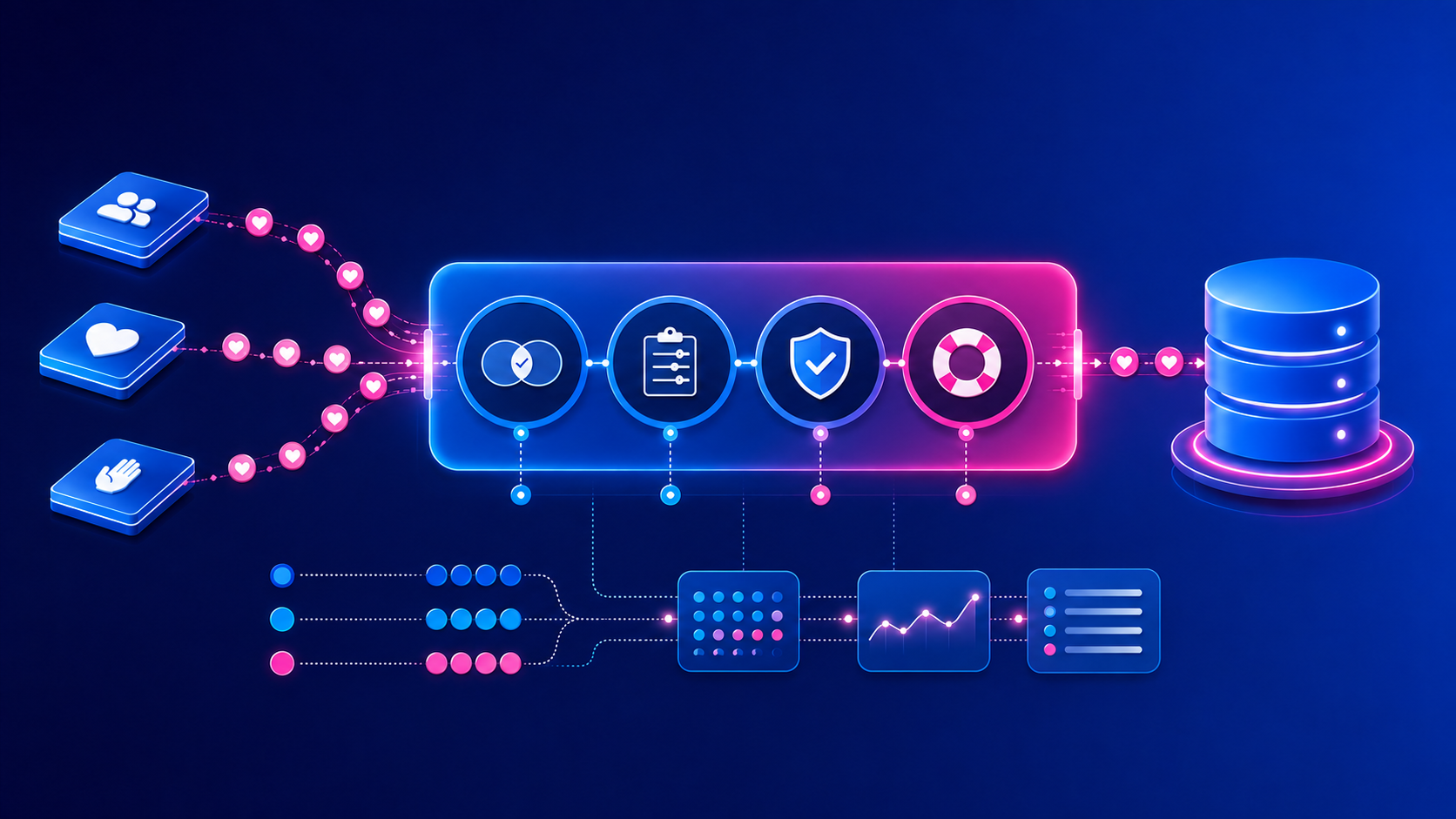
Charity Automator Data Flow acts as a controlled automation layer between your fundraising platforms and your CRM. It matches incoming transactions to existing records, applies your coding and business rules, validates the results, and transfers the data on an agreed schedule.
This gives your team more current CRM data, more consistent revenue coding, and fewer unexplained differences between systems.
Why Does Donor Data Differ Between Fundraising Systems?
Multiple Systems Often Mean Multiple Versions of Information
Most nonprofits rely on several platforms to support fundraising operations. Each system serves an important purpose, but when information is not shared consistently between platforms, records can gradually become misaligned.
Over time, teams may find themselves working from different versions of the same donor information.
What Are the Signs That Fundraising Systems Are Out of Alignment?
Reporting & Visibility Challenges
- Reports show different fundraising totals
- Teams disagree on which report is correct
- Leadership questions the accuracy of reporting
Data Consistency Issues
- Donor information differs between systems
- Gifts appear in one platform but not another
Operational Inefficiencies
- Staff spend time comparing records manually
- Campaigns are delayed while data issues are reviewed
Donor Communication & Engagement Risks
- Teams are unclear about when and how to communicate with donors
- Donors receive generic communications
These situations are common when data movement relies on manual processes or disconnected integrations.
Why Do Fundraising Platforms Produce Inconsistent Data?
Fundraising Platforms Often Operate Independently
As nonprofits grow, additional fundraising technologies are often introduced to support new initiatives and operational needs.
- Online donation platforms.
- Event registration systems.
- Marketing automation tools.
- Advocacy applications.
- Peer-to-peer fundraising solutions.
Each platform collects and manages information independently.
Without a reliable process for sharing information between systems, records can become inconsistent, reporting becomes more difficult, and staff spend valuable time reconciling information across platforms.
As the number of systems increases, maintaining consistency becomes more challenging.
How Does Data Flow Keep Fundraising Platforms and CRMs Aligned?
Charity Automator Data Flow acts as a controlled automation layer between your fundraising platforms and your CRM. It processes incoming transactions according to the matching, coding, validation and business rules established for your organization.
Apply a Controlled Process to Every Transaction
Data Flow collects transactions from connected sources, matches them to existing CRM records, applies the required revenue coding and validates the results before transferring the data on an agreed schedule.
Transactions that require attention are clearly identified and can be processed again after correction. Source IDs, batch information and processing history help teams trace transactions, reconcile results and support audits.
This process reduces spreadsheet handling while helping fundraising, finance and operations teams work with more consistent and current CRM data.
Common Systems We Help Connect
Destination (CRM targets)
- Raiser’s Edge NXT
- Luminate Online
Fundraising Platforms
-
Luminate Online
-
Fundraise Up
-
CanadaHelps
-
Benevity
-
Virtuous
Event and Campaign Platforms
-
Race Roster
-
CrowdChange
-
AKA Raisin
-
Ascend
-
Rafflebox
Custom Sources
- CSV files
- Flat files
- Databases
- Custom fundraising applications
If your fundraising platform can generate data, there is a strong possibility we can automate how that information reaches your CRM.
What Are the Benefits of Controlled Fundraising Data Automation?
Improve Confidence in Reporting
Reduce inconsistencies between systems and increase trust in fundraising reports.
Reduce Reconciliation Effort
Spend less time comparing records and investigating discrepancies.
Improve Team Alignment
Help fundraising, finance, operations, and leadership work from more consistent information.
Keep CRM Data More Current
Ensure donor activity is reflected more quickly across connected systems.
Reduce Manual Work
Automate repetitive data movement processes that previously required staff intervention.
Support Better Decision-Making
Make decisions using information that is more complete, current, and reliable.
How Does Fundraising Transaction Automation Work?
Data Flow is configured around your organization’s systems, processes and data-governance requirements.
01
Connect Your Data Sources
We connect the fundraising platforms, files and other transaction sources used by your organization to your CRM.
02
Configure Your Business Rules
We establish the logic for matching existing records and applying your transformation, coding and validation requirements.
03
Automate Transaction Processing
Data Flow collects and processes transactions according to those rules, then transfers them to the CRM on the agreed schedule.
04
Manage Exceptions and Reconciliation
Transactions requiring attention are clearly identified and can be processed again after correction. Source IDs, batch information and processing history provide the traceability needed to reconcile results.
Ready to Keep Your Systems Aligned?
Reduce the time spent reconciling reports and give your team greater confidence in the information they use every day.
Frequently Asked Questions About Fundraising Data Automation
Can Data Flow connect multiple fundraising systems?
Yes. Data Flow can collect transactions from multiple fundraising platforms, files, databases, and custom sources before processing and transferring them to your CRM.
How frequently are transactions processed?
Transactions are processed automatically on a schedule established around your organization’s operational requirements and data volumes.
Can Data Flow match transactions to existing CRM records?
Yes. Data Flow uses configurable matching logic to associate transactions with existing constituent records and reduce the creation of potential duplicate records.
Can Data Flow apply our coding and business rules?
Yes. Data Flow can apply your organization’s field mappings, revenue coding, transformations, validation requirements, and other business rules before transferring transactions to the CRM.
What happens when a transaction requires review?
The transaction is clearly identified so the issue can be reviewed and corrected. Processing can then resume without losing the original transaction.
Does Data Flow support reconciliation and audits?
Yes. Source IDs, batch information, and processing history help teams trace transactions, investigate discrepancies, reconcile results, and verify how data was processed.
Does Data Flow replace our CRM?
No. Data Flow operates as a controlled automation layer between your fundraising platforms and your existing CRM. It prepares, validates, and transfers transactions according to your organization’s rules.
2 min read
How Do I Find and Merge Duplicate Donor Records in My CRM?
6 min read
Omatic vs Charity Automator Data Flow for Nonprofits
2 min read
How Can Nonprofits Automate CSV and Excel Data Imports Into Their CRM?
1 min read
How Do Nonprofits Combine Data From Multiple Systems?
1 min read
How Can Nonprofits Secure and Govern Fundraising Data?
3 min read