1 min read
5 min read
Why Personalized Multi-Channel Communications Coordinate True Donor Retention
Evgeniya Salomatina
:
August 3, 2026
Personalization & Multi-Channel Orchestration
In an unmanaged fundraising ecosystem, direct mail, email marketing, and outbound telemarketing operate in silos. Internal project teams build separate copy tracks, work off independent timelines, and launch uncoordinated messages. While the organization views these channels as separate projects, the donor experiences them as a single, unified conversation with your mission.
When a donor receives a highly personalized direct mail letter on a Monday, followed by a generic, automated blast email on a Tuesday, the illusion of an authentic relationship breaks instantly.
True personalization requires holistic multi-channel synchronization: ensuring that your physical mail, digital email networks, and text message touchpoints echo the exact same narrative and relationship context.
1. The Math of Multi-Channel Duplication
Data shows that multi-channel donors are worth double the value of single-channel constituents:
- The Online-Plus-Offline Multiplier: Online donors who also receive coordinated offline touchpoints generate a two times (2x) higher median revenue compared to online-only givers.
- The Offline-Plus-Digital Multiplier: Traditional, offline-only donors who are backed by consistent email communication yield a 90% increase in annual value compared to those left entirely offline.
Multi-channel architectures win because they dramatically expand your total reach probabilities. While the average baseline email open rate across the nonprofit sector sits at 29%, direct mail open rates fluctuate reliably between 35% and 90%. By layering these channels dynamically, you protect your campaign from inbox delivery failures or junk folders, utilizing repetition to reinforce the core campaign story.
Well, their statistics show that multichannel donors are actually worth double. So the stat on the left shows that we have a two times higher revenue for online donors when we communicate on multiple channels versus communicating online only. So all those online donors communicating online and offline, though the value of those donors goes two x. And on the flip side, for your offline donors, for which obviously you have an email as well, there's a ninety percent increase. So very close to two x as well versus offline only only. So donors that use, you know, send an email or direct mail to, if you also back that with an email, you statistics show a ninety percent increase in value for those. So multichannels worth twice as much. And there's a few reasons for that. One of them is just being able to reach them. And so if the average email open rate in the industry is twenty nine percent and the average direct mail open rate, and this one's a little trickier to to kind of measure, but estimates are between thirty five and ninety percent. And so if you if you think about combining these, then you increase basically your chances of reaching those donors. A donor might open an email, but not get the direct mail or vice versa, get direct mail, but their email lands in spam. You increase the chances of actually reaching them at least once. And further than that, you give them more reminder, repetition. We all know repetition is a very good marketing strategy. And so the person might get the email, not react right away, or and then get the piece of mail and then react or vice versa.
2. How to Avoid the Digital-Only Fundraising Trap
Many advancement operations fall into a dangerous cost-cutting trap: assuming that once a donor switches to giving online, the organization should cut physical mail costs by shifting them to an online-only stream. An extensive behavioral study executed by Masterworks Agency exposed the financial fallout of this assumption.
When direct mail distributions were cut by 75% for donors who transitioned to online giving, those donors did not simply keep giving online, their total net revenue actively declined. In contrast, the control group that continued to receive physical mail trigger pieces won on overall net revenue.
Physical mail acts as a critical psychological prompt for digital engagement. Eliminating the physical letter removes the primary catalyst that reminds the donor to open your email and execute an online gift.
3. How to Coordinate Multi-Channel Fundraising Campaigns
To capture this multi-channel revenue without overwhelming staff with manual data sorting, operations teams must abandon spreadsheet-driven list manipulation. AmpliPhi eliminates multi-channel communication friction through a centralized campaign grid.
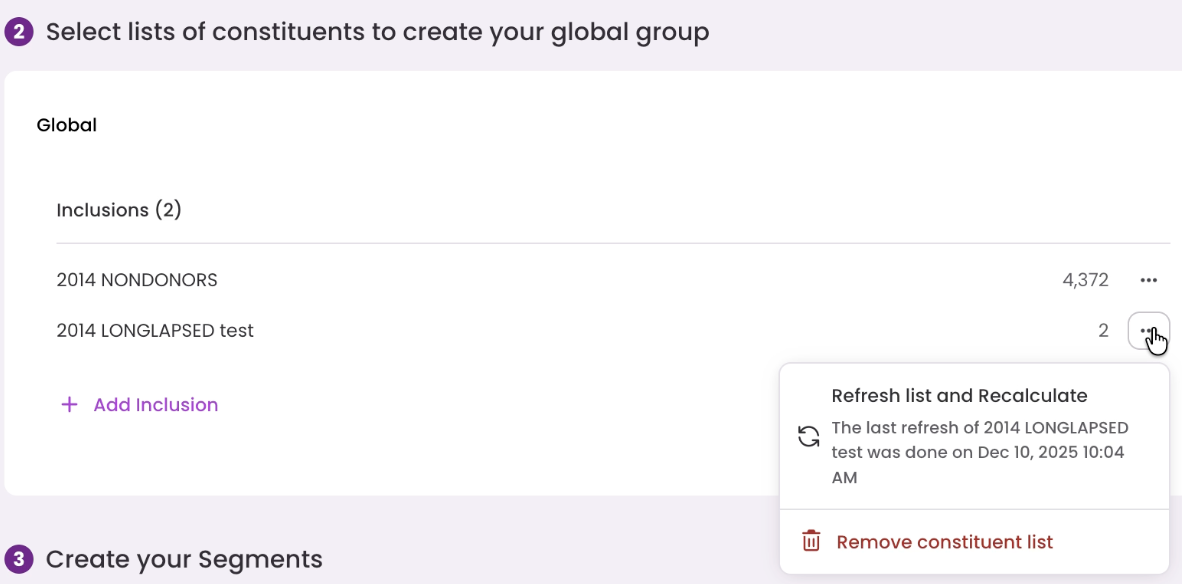
What AmpliPhi is is a segmentation platform that integrates directly with your CRM, and it was built to provide control and clarity and confidence so that you can build more successful campaigns. What the concepts we're gonna look at today, you can, you know, use those concepts whether you're using AmpliPhi or you're doing straight queries in RaiseEdge or anything else or using Excel. They're just broader concepts, but you'll see we're using AmpliPhi because it's really easy to navigate, to explain these concepts, and at the same time, we're trying to show you all the wonderful things that we're building here at Simplify. One last thing before you dive in, we're gonna go backwards. So we're gonna we're not gonna do the export part. That's really strictly in your CRM. But what we're we're gonna do is we're gonna start from the end of the campaign part where we're assigning appeals, and we're gonna work our way backwards or upwards in time to see how the segmentation works. So we're gonna start with that sort of like a finished campaign with all the signed appeals, and then we're gonna work our way towards the segmentation and all that criteria. If anybody has any questions or comments or anything like that, please do drop them in the chat as we move along here. And let's dive in. But just before we do sorry. There was a quick poll on the on the screen there. There we go. And so just before we dive into the live demo, what I'm curious. What do you currently use for your segmentation? So you can answer that poll directly on the webinar window. You should see that poll coming up at top right, I believe. What are you using? So what we're gonna do today is we're gonna look at we're gonna look at start by looking at a completed campaign, if you will. We're gonna explain how that works, and then we're gonna work our way backwards. So here we've got a sample campaign. This is all demo data. So the numbers are all fake and it ties to fake data behind it. But this will give you a good example or good understanding. So we start with this our segmentation strategy here for our campaign. So we group our segmentation strategy in channels. On our segmentation strategy, we've got our monthly donors, we've got our new donors, we've got our annual donors, and these are subdivided as well into our lapsed donors within our annual donors. We've got within monthly donors, we've got new monthly and active monthly, and I'll show you how that segmentation works a little later on in this presentation. So we've taken that segmentation strategy. We've defined what we want as channels as well. We're gonna reach people by mail and by email. And what that does is it builds out this nice grid down here where I can see my segments. So each segment is a row here. So I've got my new monthlies, my active monthlies, my in memory donors, and so on and so forth. And I've got my channels as columns. And what AmpliPhi does here is it crosses each of those audiences, each of those segments with who's available to be reached on each of these channels. And it provides those numbers here. And you can click on those numbers and drill right into your CRM and see the list of who that population is. Now an important thing to remember here, and this is where it gets kinda cool, is these channels here have the the rules of communication baked into the channel. It's always pretty much the same who you can reach by mail or who you can reach by email. So your inclusion exclusion codes for those specific channels, excluding things obviously like your deceased records or donors that have asked not to be solicited. These are all things that are baked in to the configuration of your channels when you set these channels up. And you can set up as many channels as you want. And so once those channels are set up and you add them to a campaign here, then all of that communication rule gets crossed with your segmentation. And your segmentation at that point is really focused on the donors and the journey that they're on and where they're at.
By cleanly intersecting your dynamic segments with independent mail and email channel compliance boundaries, the platform automatically deconflicts your lists. It handles deduplication across streams natively and calculates real-time print and digital counts before data is locked.
Fundraising specialists can confidently configure custom appeal and package codes across every crossing point, knowing the exact operational totals before pushing data into Raiser’s Edge NXT.
3 min read
First-Time Donor Segments for Hospital Foundations: A Practical Guide to Segmentation, Retention, and Revenue Growth
Hospital foundations are investing more time and resources into fundraising than ever before, yet many teams continue to face the same challenge:...
3 min read
Why Donors Who Give the Same Amount Need Different Strategies
For many fundraising teams, donor segmentation is already part of everyday work. Donors are grouped by campaign, giving level, or recency, and these...
3 min read
Multi-Channel Donors Are Worth 2x
The shift fundraising teams are experiencing For many fundraising teams, multi-channel strategy is already part of everyday work. Campaigns include...
3 min read
The Ultimate Guide to Donor Segmentation: From Database Friction to Smart Growth
Read More
20 min read
How to Segment an Annual Giving Campaign: The Complete Guide
Introduction: Why Segmentation Is the Foundation of Modern Annual Giving Annual giving campaigns are under more pressure than ever before. Donors...
6 min read
Why Fundraising Feels Harder Today and How Nonprofits Can Improve Donor Retention
For many nonprofit teams, something has shifted over the past few years. Campaigns are more frequent, more channels are available, and the tools are...