Donor Segmentation Guide for Hospital Foundations
 SimpliPhi : Jul 7, 2026, 10:51:08 AM
Download a practical donor segmentation guide for hospital foundations. Review acquisition sources, donor follow-up, and audiences before your next...
Official Partner

We believe powerful tools shouldn't be complicated. SimpliPhi helps organizations work smarter, move faster, and drive real impact—simplifying the hard stuff so you can focus on what you do best.
To operationalize data effectively, fundraising and operations teams must share a unified, math-driven understanding of the donor lifecycle based on data from the Fundraising Effectiveness Project.
Most legacy donor management workflows create unintentional operational friction between fundraising specialists and data administrators, plagued by critical limitations that distort donor insights and consume hundreds of staff hours. There is a better way to segment your data:
Many database managers build segments using the Last Gift criteria field. This is an operational hazard. The standard Last Gift field pulls the literal last transactional entry on a record, which frequently captures $0 event check-ins, unfulfilled pledges, failed recurring gift instances, or NSF checks. Base your segments on the structured Gift field, explicitly filtering for values greater than $0 and restricting gift types to single, cash-in-hand transactions (omitting raw write-offs or unfulfilled recurring templates).
Combining lists via traditional "Merge Queries" (using an AND operator) outputs a static query result. This destroys real-time automation. The output lists remain frozen in time until an administrator manually executes a refresh. This completely obscures the tracking chain of how queries are nested. Operations teams should use dynamic Sub-Queries (Select from Query) to filter the database sequentially while ensuring live data updates automatically.
Query tools are built exclusively to filter groups, not to extract clean rows of data. If a fundraiser pulls an multi-channel export directly from a query built with behavioral parameters (like "gifts within the last 12 months"), any donor who made multiple distinct donations will generate multiple, duplicate rows in the output CSV. This causes database row inflation and wastes mailing budgets. Teams must use dedicated Export modules to guarantee a strict configuration of one single row per constituent record.
To scale multi-channel giving without multiplying manual errors, organizations must shift to an automated, channel-agnostic Segmentation Hierarchy.
Software shouldn’t create tasks; it should operationalize strategy. Built to act as an agile workspace directly connected to Blackbaud Raiser’s Edge NXT or Salesforce via secure API, AmpliPhi.app replaces hours of manual CSV assembly with an automated, user-friendly control panel:
Zero PII Footprint: To ensure absolute security and GDPR/data privacy compliance, AmpliPhi reads your live query architecture to build segments and visualize counts without copying or storing donor personal identifiable information (PII) like names, phone numbers, or physical addresses.
Clickable Validation Elements: Every audience number displayed inside the app. Clicking any specific count instantly generates the matching live list directly within RE NXT or Salesforce for rapid manual validation.
By aligning fundraising strategy with database integrity, your organization stops operating as a reactive vendor pulling data requests and stands as an authority in Better Nonprofit Segmentation.
Stop wasting valuable strategy time managing manual database workarounds and shifting spreadsheets back and forth. Move forward with complete clarity and data confidence.
 SimpliPhi : Jul 7, 2026, 10:51:08 AM
Download a practical donor segmentation guide for hospital foundations. Review acquisition sources, donor follow-up, and audiences before your next...
.png)
 Evgeniya Salomatina : May 8, 2026, 11:56:35 AM
How Hospital Foundations Can Improve Donor Retention Through Segmentation
 SimpliPhi : Jul 2, 2026, 2:53:54 PM
How Nonprofits Can Personalize Donor Outreach and Boost Engagement with Smarter Segmentation.
.png) Evgeniya Salomatina : Apr 14, 2026, 3:07:25 PM
Evgeniya Salomatina : Apr 14, 2026, 3:07:25 PM
Why do donors who give the same amount behave differently? Learn how donor affinity impacts segmentation, retention, and fundraising performance.

 William Da Silva : Mar 26, 2026, 3:39:57 PM
Fundraising is getting harder as donor expectations shift. Learn why donor retention, segmentation, and multi-channel alignment are key to improving...
 Evgeniya Salomatina : Aug 26, 2026, 2:41:50 PM
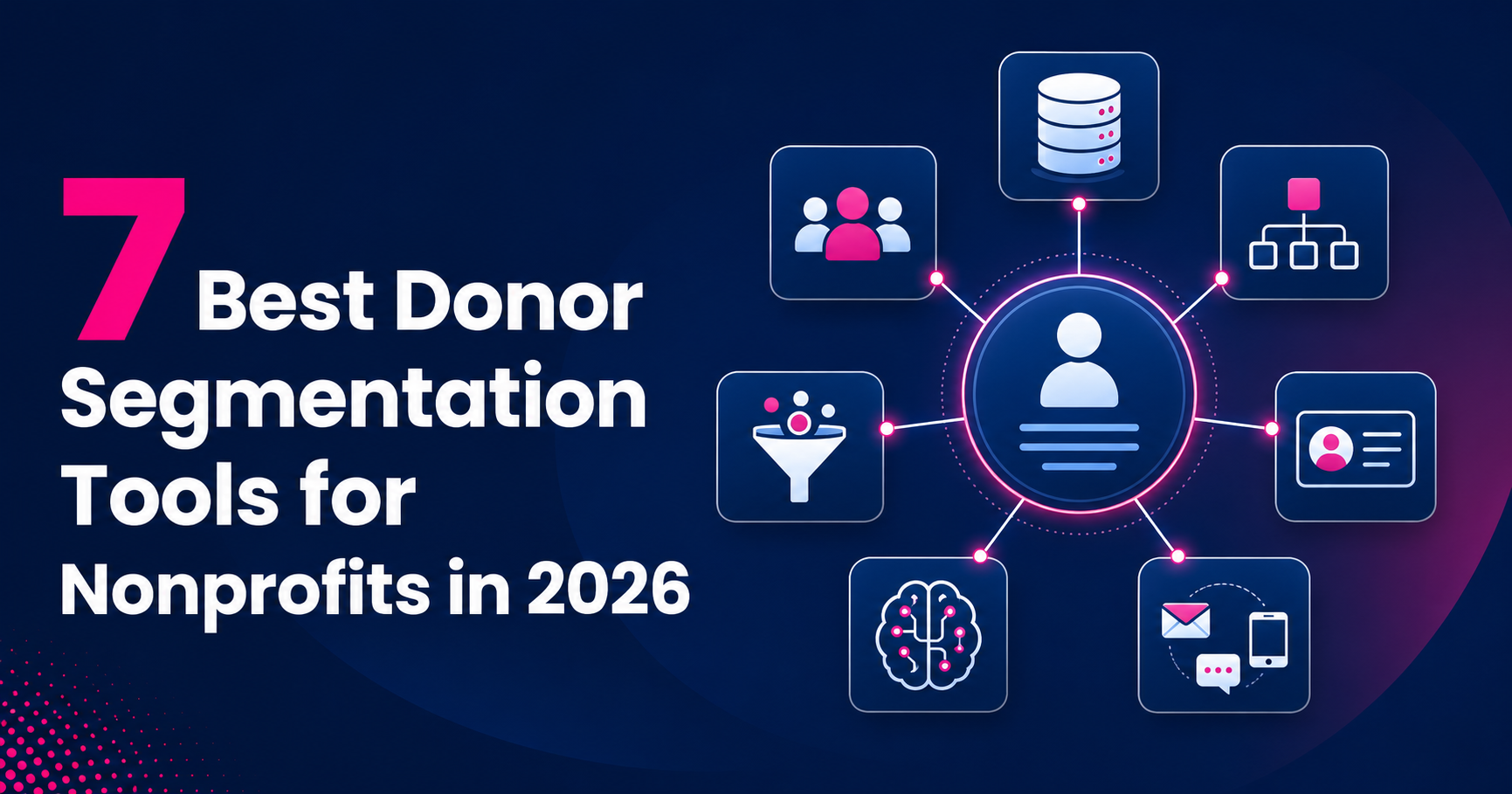
Compare 7 donor segmentation tools for nonprofits in 2026. See CRM connectivity, audience priority, validation, multichannel planning, AI, and best...
 Evgeniya Salomatina : Oct 9, 2026, 5:11:47 PM
Define who approves donor exclusions in hospital foundation campaigns, what to record, and how to handle late changes across email and direct mail.
 SimpliPhi : Jul 2, 2026, 2:53:24 PM
Sending more emails doesn’t mean more donations, too many messages can overwhelm donors and hurt engagement. Instead, nonprofits can use automation...